Note: Opinions or points of view expressed are those of the author(s) and do not necessarily reflect the position of USC4P&J
We want to hear
from you!
If you'd like to write an article on an issue or initiative dear to your heart, send it in for publication to: info@peaceandjustice.it
“Unofficial” Referendum in Vicenza, Italy:
95% Opposed to New U.S. Military Base
On October 5, 2008, Vicenza overwhelmingly said no to a second U.S. military base. In a referendum that had officially been suspended just four days before it was to take place, 24,094 voters, determined to express themselves, showed up to cast their votes. The referendum asked local residents if they agreed with the City of Vicenza taking up measures to purchase the Dal Molin area, the site of the proposed base, in order to designate its use in the public interest and to protect the environmental integrity of the site. With a resounding no to the new base, 23,050 voters, or 95.66%, voted in favor of the referendum.
The people of this city in northern Italy had been asking to have a say in this issue that has dominated local politics since May of 2006, when news of the proposed base first began to leak out. More than two years later, it had finally been called following a vote by the newly-elected city council this past June. Vicenza's mayor, Achille Variati, had been elected in a runoff vote in April of this year on a platform that opposed the base and supported a local referendum.
As the date of the referendum neared, a campaign against this expression of democracy began. The Special Commissioner appointed by the government, Paolo Costa, called the referendum “anti-democratic” and Italian Prime Minister Berlusconi went so far as to write an open letter to Mayor Variati, in which he described the referendum as “seriously inopportune.”
A legal battle against the referendum was lead by Roberto Cattaneo, an official in Berlusconi's Forza Italia party, member of the Vicenza Provincial Council and a former employee of the existing base of Camp Ederle. Cattaneo is also the leader of the Committee Si Dal Molin, which is in favor of the base, but judging by the lack of any public events, has a rather small popular following. Cattaneo presented a case before the TAR, a regional administrative court, in early September calling for the referendum to be blocked. His case maintained, as the national government had been doing for some time, that the city had no authority to purchase the area and the referendum was therefore inappropriate.
The administrative court ruled against the case on September 18, stating that the referendum was of a purely explorative nature and could therefore proceed. Cattaneo then appealed to the Council of State, who overturned the previous court's decision – in record time – and suspended the referendum.
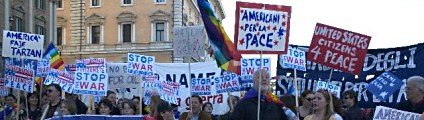
On the evening of October 1, as they learned of the court's decision, the people responded with outrage and over 12,000 poured into the main square in Vicenza for a demonstration that had been organized just hours before.
Vicenza's mayor took to the stage and said “If they won't let us vote inside the polling places, then we'll vote outside the gates.” And so it was, with new meaning given to the term “popular referendum.”
Despite this being an “unofficial” vote, it was organized with strict adherence to the rules. City residents were required to go to their normal polling place and identification was required. Some city council members also served as polling place supervisors and a committee to guarantee the results, including a notary, was nominated. In all, over 500 volunteers were on hand to make sure everything went smoothly.
The center of operations was organized on one of the main squares in the historic center of the city, allowing for complete transparency and public observation of the vote. A press center was also organized, with everything from wireless internet access to separate areas for the press to arrange interviews.
Voting started at 8am. By noon, nearly 10,000 people had already voted, including a man who had just celebrated his 100th birthday. Voter turnout at times overwhelmed some of the 32 polling places throughout the city, with long lines forming.
Voters often offered a contribution towards the expenses of the referendum before even voting. Many brought warm drinks and food to the volunteers at the polling places.
At 9pm the polls closed and the vote count began at the center of operations, with hundreds of citizens present to follow the results. Just after midnight the results were announced: 95.66% had voted in favor of the referendum, and against the new U.S. military base. The people had spoken.
In addition to the local referendum, other cities throughout Italy also organized symbolic votes in solidarity with the people of Vicenza, from Val di Susa in the north to Cagliari in Sardinia, an island that has seen the devastating effects of military bases.
Aware that the impact of this base is hardly limited to the city of Vicenza, an online vote was also organized allowing people all over the world to participate symbolically in the referendum. Over 30,000 people voted, with 80.7% against the base.
The unofficial nature of the referendum has been cause for criticism by supporters of the new base, including Cattaneo, who brought about the legal case that ultimately suspended the vote. He has been kindly invited by the mayor of Vicenza to organize his own referendum in favor of the base and to bring 24,000 citizens out to vote.
As Mayor Variati said following the vote on Sunday, “This wasn't an official referendum, but a referendum obstructed and denied by public officials.” Some were afraid to take part in the vote, many others, instead, felt they had to participate. 24,000 “conscientious objectors”, aged 18 to 100, took to the polls. They paid no heed to what had been said or written by everyone from Prime Minister Berlusconi, to Defense Minister La Russa, the Council of State, Governor of the Veneto Region Galan, all the way down to Cattaneo. They cast their votes to say we don't want to see further militarization of our city.
This wasn't a “normal” referendum, with so many public authorities against it. And for that very reason, the result was exceptional.
It was an extraordinary example of citizens taking democracy into their own hands, a victory over apathy. And it wasn't the first time it had happened in Vicenza, where for over two years the people have not only succeeded in blocking construction of a base they don't want, but also in creating a community which takes an active role in the politics that affect their lives and the lives of others around the globe.
Stay informed
Join the USC4P&J mailing list to stay informed on events and initiatives.
Ongoing/Future Events
Our Eyes Wide Open Film Series is suspended; for further information click here.
Upshot of our Nov. 9th group discussion on current politics:
It wasn't the Russians that got us Trump. Or Comey. Or even the massive GOP election fraud. It was the DNC.* *Dem National Committee
To learn how to stop the DNC
from delivering us another Trump, read Autopsy: the Democratic Party in Crisis.
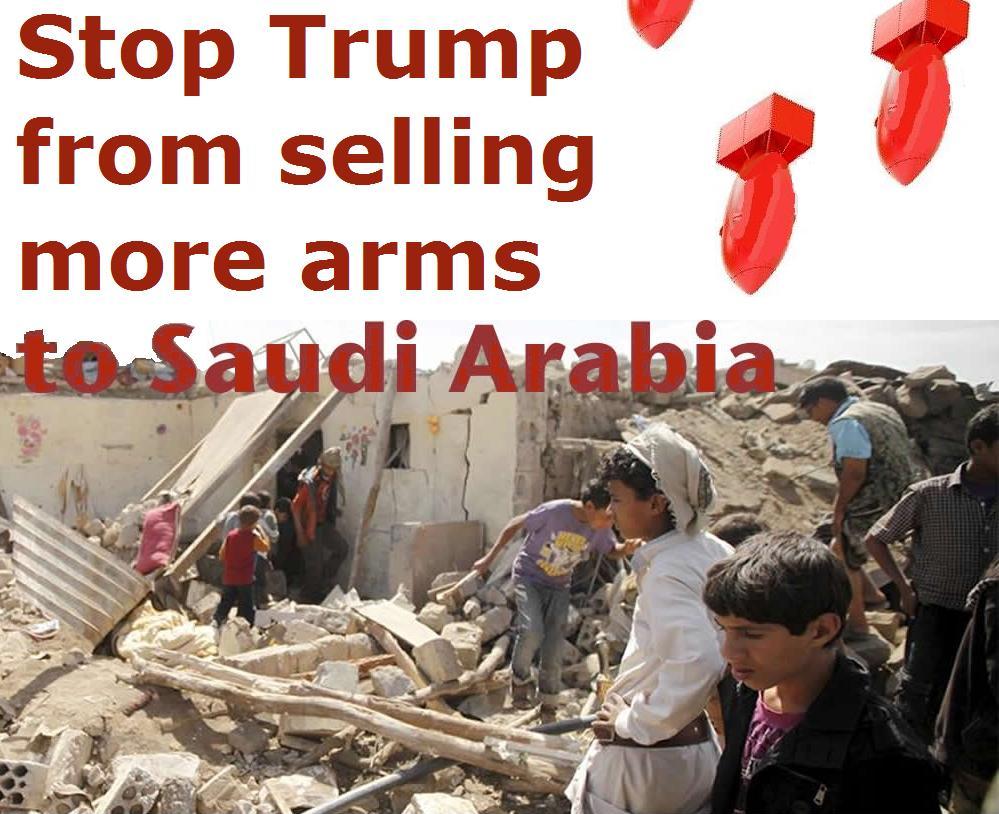
Photo of a school in Yemen bombed by Saudi Arabian jets supplied by the U.S. and fueled in the air by the U.S. Air Force.
Tell Trump to STOP THIS CARNAGE, not fuel it! Click here.
Also participate in the CodePink email and/or phone initiative:
Click here to sign a petition, to put an end to the sanctions against Syria - their only effect is to take a terrible toll on the population, causing them to migrate! And click here to see the video by the Italian Committee to lift sanctions against Syria.
Did someone tell you that U.S. military intervention in Iraq was over? Not true: we're at it again. This time the pretext to drop bombs is "curbing ISIS" (which was created by the U.S. in the first place, to overturn al-Malaki in Iraq and then Assad in Syria, and is now out of hand.
Like what happened to "our" creature al Qaeda in Afghanistan). And the death toll continues to rise...
Write your senators and tell them: "Enough! U.S. out!! Iraq has shown it can curb ISIS by itself!"